
Liberica: The Future of Coffee?
by Nathanael Curtis
If you’ve spent any time talking to baristas, you must have heard about the diversity in coffee. Different regions of the world, different processing methods, and different varietals can all produce many varieties of flavor. However, even all that diversity is more limited than you may think. Coffee is the second most traded commodity in the world, right behind oil, but over 95% of that entire market is dominated by two species, arabica, and robusta. However, as climate change threatens both species with extinction, coffee professionals have started looking for alternatives. One alternative that has gained prominence is coffea liberica, the Liberica plant.
To understand how liberica fits in the picture, it’s important to understand the roles Arabica and Robusta play in the coffee world. Arabica is probably what you’re drinking right now, and it is believed to be the first species of coffee to ever be cultivated. Its roots date back to pre-Islamic scholars in Yemen who needed a caffeine boost to work long hours. Robusta is Arabica’s more cost-effective, pest-resistant alternative. It has double the caffeine and half the sugar of Arabica, but some dislike its distinct bitter and salty taste. It’s found its place largely in Italian coffee culture, Vietnamese coffee culture, and in instant coffee. However, in recent years, the stigma around Robusta has begun to fade. But just as the coffee world warms up to the bitter coffee plant, recent studies have indicated that even Robusta may be in danger from rapidly changing temperatures. Deforestation and the coffee berry borer pest—which has benefitted from the changing climate—thwart the growth of Arabica and Robusta.
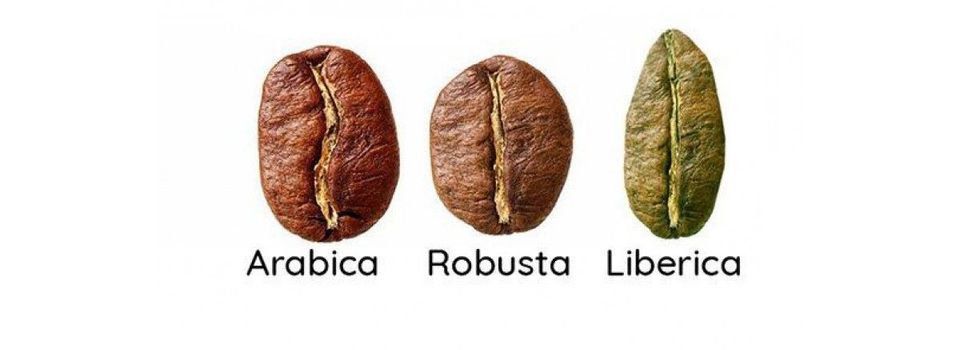
All this is why some professionals have speculated that Liberica could be a promising alternative. Liberica is more resistant to leaf rust than Arabica and Robusta, and it can grow in warmer, lowland regions. Information on its flavor can also come across as contradictory. Some report it as having a smooth, tea-like finish, while others disparage it for tasting vegetal or soup-like. The reason for this inconsistency seems to be that the bean itself is difficult to roast. They are physically larger than any other species, and they have an oblong shape with small tips. The size and unusual shape mean they must be roasted rather light and delicately, so they don’t get charred.
Liberica occupies about 1.5% of the commercial market. The peculiar plant owes its current position to an epidemic of leaf rust in the 1890s which decimated the Arabica population. While most producers in Africa at the time switched to Robusta, many producers in Southeast Asia switched to Liberica. Today, Liberica still accounts for a whopping 70% of the market in the Philippines. More markets are showing interest in the species, but its rarity means it remains quite expensive. Additionally, the crop yield is much lower than its cousins, which makes it less attractive for producers.
In order to find solutions to the problems growers around the world are facing with their crops, a lot more work needs to be done. The USDA’s rule of thumb for crops generally is that roughly 1% of a crop’s production value should be reinvested in breeding and genetic improvement. Coffee’s production value across the globe is $18 billion annually. It’s hard to quantify exactly how much investment in crop improvement there is annually, but the most liberal of estimates have it at about $80 million a year, less than half of what it should be. Coffee is facing an uphill battle, and like so many issues today, there are no simple answers. The good news is importers, producers, and coffee professionals around the world are all working on new solutions every day. At Solid State Coffee our aim is always to bring you coffee from forward-thinking producers that respect their crops and the environment they’re grown in.
Let us know what you think about the state of affairs in the coffee-growing world and whether or not you’d be interested in trying a robusta or even a Liberica coffee.
Is this coffee species the future of your morning brew?https://t.co/PV8zDdkoGK
— Solid State Coffee (@nycsolidstate) June 29, 2023