
Co-Fermented Coffee: What is It
You may have seen a tin can appear on our shelves this month. A bold, colorful label wraps around the can with “Peaches & Coffee” printed in a retro font. What does this mean? Is it a can of peaches? Is it coffee? Is it… somehow… both?
The short answer: it’s coffee! They are roasted coffee beans. We didn’t do anything special to them on our end. However, the coffee underwent a unique fermentation process at the farm. It was co-fermented with dehydrated peach and fruit glucose. This process of co-fermentation has become something of a fad in the coffee world. It allows producers to exert finer control of the coffee’s flavor profile and make a more consistent product. However, coffee traditionalists have objected to the trend, saying that we are losing sight of that “coffee” flavor.
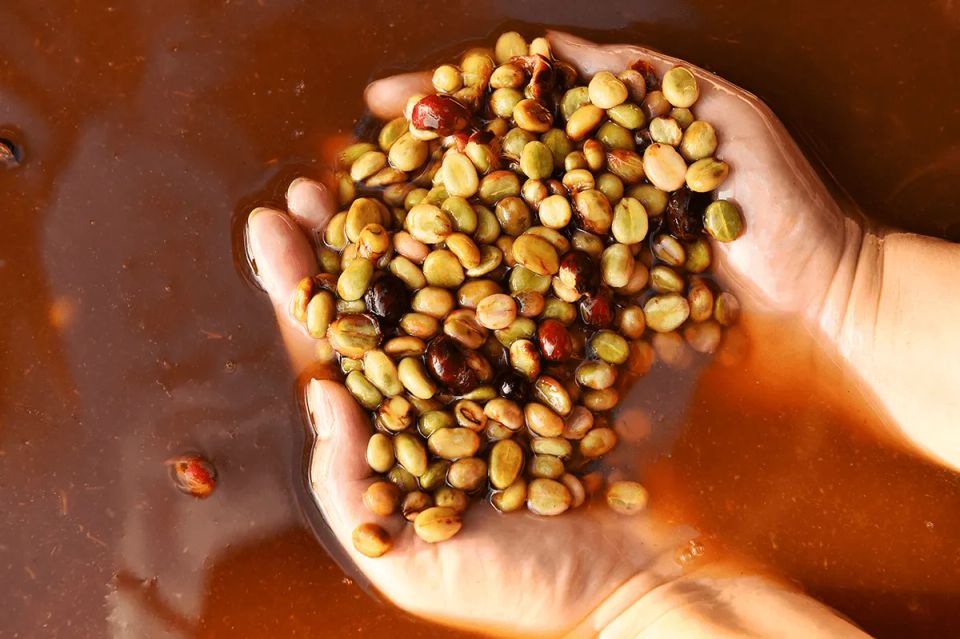
What does this process even entail? To explain, let’s talk about how coffee is processed. All coffee is fermented, at least a little bit. A washed process coffee, which allows for the least amount of fermentation, is de-pulped by machine and soaked in water for a few hours to remove the mucilage. While it soaks in water, microbes begin to consume the yeast and sugar found naturally on the bean.
In the past several years, producers have sought finer control of the fermentation process. Some trends have appeared such as anaerobic fermentation. While these processes have created unique flavor profiles in the coffee, none of them involve major additives. They are simply letting nature do its work.
Now, we have reached the next step, with some producers experimenting with additives. They literally add other food compounds to the fermentation tanks. What exactly have producers been adding? Any number of things! Often, they are simply fermented with fruit, but coffees have appeared on the market boasting fermentation with ginger, hops and chili.
This trend has not appeared without protest. Coffee traditionalists claim that co-ferments lose that classic coffee flavor. Even beyond that, co-ferments have evoked resistance in the competition world. Is it fair for a coffee with additives to compete against a traditionally processed coffee? The SCA has ruled that co-ferments cannot be used for barista competitions. They have also ruled that co-ferments must be labeled if a non-coffee product is added. Many roasters have called for transparency and precise labeling of additives.
Labeling is easier said than done, however. The FDA has very little regulation for green coffee, because the product is served after being heated in two ways: roasting and immersion with boiling water. Because of this, regulators do not require much oversight over processing methods. A co-ferment is not considered an “additive,” because the final product is still green coffee. In recent years, these processes have gotten more complicated as producers experiment with new methods, many of which are proprietary. A standard label of process and additives information may be too big of an ask.
Controversy aside, the trend makes for a unique product! The co-ferment on our shelves comes from a trusted source. Sebastian Ramirez is a producer in Colombia, and is somewhat of a celebrity in the coffee world. He has quite a few interesting processes and several great coffees! This peach co-ferment produces a wild cup of coffee, and is currently available online and instore as pour over as well as retail!
For the coffee purists out there, never fear! We will always serve traditional coffees, with that good “coffee” flavor. For anyone who wants to try something a little more out there, give this Sebastian Ramirez coffee a try!